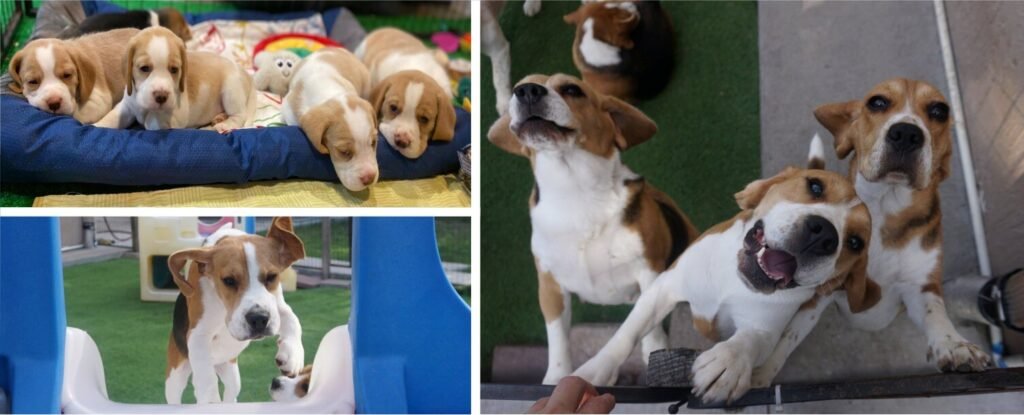
I bought my first beagle in 2007, when my first baby was 1 year old, her name was “Apple Pie” we immediately felt in love with the breed, then I bring home the second one “Orestes”, I started visiting this kennel very often, ‘Jogama’s Beagles” especially when they had puppies, a beautiful friendship begun with the person in charge of the nursery Mrs. Esperanza, I loved to see the joy of this families taking home their new addition, and the devotion Mrs. Esperanza dedicated to this puppies to be ready to go to the new adventure. And right there my passion for breeding started.
In 2010 Royal-Tea beagles were born with my first litter and the rest is history. With all my family on board, we have dedicated ourselves to breeding pure bred beagles and got into the hobby of show dogs, sharing our pups and passion with amazing families.
OUR CORE VALUE
Breeding high-quality Beagles with minimal health problems
We truly believe Breeding dogs with health standards is crucial to ensure the well-being of the puppies and the overall health of the breed. We prioritize the health, well-being, and proper placement of our dogs. We conduct genetic test on our breeding dogs to ensure they are free from hereditary diseases, we do not overbreed our dogs, every female deliver 2 litters in a lap of 4 years, then they are spayed and retired with us or with a selected loving pet family. Our Puppies are raised in a home environment where they are well-socialized with people and other animals, we provide the best nutrition for the puppies and the mother with all the supplements and vitamins needed for their well development. We carefully screen potential buyers to ensure our puppies go to loving, responsible homes. We offer support and advice to our new owners and help them with any question or issue that arises.
Responsible breeders contribute to the health and well-being of their dogs and the overall improvement of the breed.
HOW DO WE DO IT.
Breeding high-quality Beagles with minimal health problems requires careful planning, knowledge, and adherence to responsible breeding practices.
1. Health Screenings and Genetic Testing
· Hip and Elbow Dysplasia Evaluations: X-rays to check for joint abnormalities. · Eye Examinations: Conducted by a veterinary ophthalmologist to detect hereditary eye conditions. · Cardiac Exams: To identify heart conditions. · Thyroid Testing: To check for hypothyroidism.
The Genetic tests can identify carriers of specific genetic disorders. We use Embark. Embark tests for over 250 genetic health risks, helping us identify potential health issues in the sire/Dam to be selected for breeding. Embark also provides insights into over 35 physical traits, including coat color, length, shedding, and body size. Embark’s test results are accepted by the Orthopedic Foundation for Animals (OFA) for conditions where the OFA has an established DNA registry.
We also use the Canine Health Information Center (CHIC) The CHIC database provides a centralized resource for health screening results. What is the CHIC number? The CHIC number is not about Normalcy, it is about encouraging health screening in accordance with a parent club’s testing protocol. Sharing the test results in the public domain and increasing health awareness with the idea to improve the overall health of the breed allow breeders to make informed breeding decisions.
2. Selecting Breeding Pairs
To select the breeding pair, we pick a stud who can complement the dam and improve the future generation. After, we do an intense and prefund pedigree study. A pedigree is essentially a family tree for a dog, showing its lineage and ancestry. It includes information about the dog’s parents, grandparents, and further back, often up to four or five generations.
Key details in a pedigree include: · Registered Names: The official names of the dogs. · Titles: Any titles the dogs have earned, such as Champion (CH) or Field Champion (FC). · Health Clearances: Information about health tests and clearances. · Breeder Information: Details about the breeders and kennels involved.
When studying pedigrees, we look for dogs that have the desirable traits and health clearances in Conformation, Temperament and Health. Also, we Analyze Inbreeding Coefficients (COI) measures the degree of inbreeding in a dog’s pedigree. A lower COI indicates greater genetic diversity, which can lead to healthier offspring.
3. Proper Nutrition and Care.
Raising a litter of beagles sounds like a joyful yet challenging mission. Beagles are known for their energetic and friendly nature. Health first: our puppies get regular vet check-ups, vaccinations, and deworming. We Keep a close eye on their health and development. Nutrition matters: we Provide them with high-quality puppy food appropriate for their age, we particularly use “Pro Plan 30/20” Salmon (All stages). Feed them 3 times a day, and complement them with momma’s milk, week 4 to week 7, by the 8 week they are only on kibbles. Fresh water always is accessible, especially when they are on kibbles, dehydration can occur if the puppies do not drink enough water.
Socialization: We expose them to different environments, people, sounds, and other animals to help them become well-rounded dogs. The more experiences they have early on, the more adaptable they’ll be as adults. Training basics: Start with simple configuration after they leave the whelping box, we accommodate an x-pen with a litterbox they learn to use. Beagles are smart but can be stubborn, so patience and consistency are key. Playtime and exercise: Beagles are active and need plenty of physical and mental stimulation. This X-pen has plenty of toys according to their age to keep them engaged and happy, this X-pen provides a safe space with enough room they can run, play and exercise. Give them lots of love and attention, and they’ll grow into wonderful companions.